

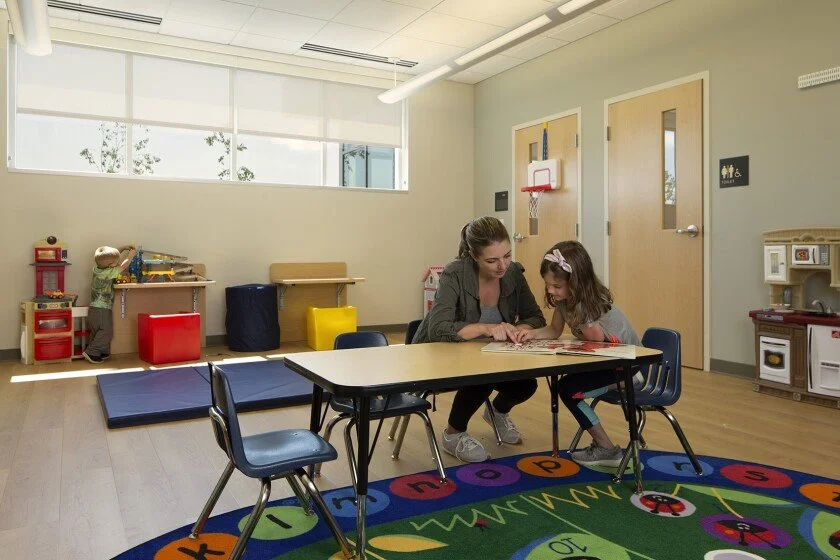
For many parents, the moment a child with Autism Spectrum Disorder (ASD) enters a traditional classroom is fraught with a specific kind of anxiety. We worry about social cues and academic milestones, but the architectural evidence is clear: the physical environment itself is the foundation of learning. In my work as an educator, I have seen how a room can either be a silent partner in a child’s progress or its greatest obstacle.
With ASD affecting approximately 1 in 33 children in the United States and 1 in 100 in the United Kingdom, the "standard" classroom is no longer sufficient. To a neurodivergent child, a room is not a neutral space; it is a complex web of sensory inputs. My goal is to help you understand how purposeful design can transform a chaotic, overstimulating environment into a supportive haven that fosters emotional regulation and focus.
The Visual World of Autism: Strengths and Struggles
Children with ASD often possess a "detail-focused processing style." This means their brains are wired to prioritize minute data points over the "big picture." While this results in unique cognitive strengths, it creates a significant Visual Paradox:
The Strength: Many children with ASD exhibit an exceptional ability to detect visual targets. In high-speed tasks, they often outperform neurotypical peers and even adults, showing a remarkable capacity for visual-motor precision.
The Struggle: The "Social Orienting" challenge is a critical barrier. Research shows that children with ASD often avoid faces specifically after an adult begins to speak. Furthermore, because they focus on facial details rather than the whole expression, they struggle to interpret a teacher's intentions. They find it physically difficult to "disengage" from a concentration point to transition their focus to the teacher's voice.
The Special Educator’s Warning: Decorative "extras" that teachers use to brighten a room—such as a bulletin board border featuring colorful trains—are often "irrelevant stimuli." For a detail-oriented child, these trains are not decorations; they are high-intensity distractions that can accidentally pull a child’s attention entirely away from a lesson.
The Anatomy of an Autism-Friendly Classroom
When designing for ASD, we must move away from "averaged" design and toward an individual-centric approach. According to guidelines from leading specialists like GA Architects, a successful learning space must prioritize the following:
A Sense of Peace and Order: Eliminating visual "noise" to lower cognitive load.
Proxemics: Respecting the "suitable amount of space" between people to prevent the feeling of being crowded, which is a frequent trigger for anxiety.
Durability: Using sturdy, easy-to-maintain materials that provide environmental consistency.
Acoustics and Boundary Security: This involves more than just noise reduction; it requires "stopping intruders." In architectural terms, this means creating a secure perimeter to prevent "uncontrolled and unwanted exiting" (elopement) into noisy, crowded school corridors.
Case Study: The Katowice Transformation
At the Tadeusz Kościuszko Primary School No. 11 in Katowice, Poland, researchers tackled the challenge of an integration classroom designed for 24 children. They used zoning to create a revolutionary "withdrawal" system.
Initial Problems: and their Designed Solutions
General Chaos: Visual "overfill" from scientific aids and personal items.
Hidden Storage: Neutral-colored, closed cupboards and drawers that keep unused items out of sight.
Aggressive Colors: Random, bright colors on mobile equipment and furniture.
Subdued Palettes: Cream, white, and grey walls with color-coded accents for specific functions.
Lack of Zoning: No clear distinction between work, play, and hygiene, leading to transition anxiety.
Defined Space Zoning: The creation of a dedicated Welcome Zone, Storage Zone, and private Toilet Zone.
Safety Concerns: Unmarked exits leading to noisy corridors.
Visual Warnings: Exit doors painted Red with pictograms to signal the end of the "safe" zone.
Sensory-Smart Details Every Parent Should Know
In my career, I have advocated for environmental "hacks" that allow a child to navigate their day organoleptically—using their physical senses rather than relying on constant verbal prompts. Here are a few methods you can use.
The Floor as a Map
Texture is a powerful communication tool. In the Katowice model, high-traffic zones use anti-slip, corrugated dark grey flooring. However, the play area is marked by a "puzzle" carpet with a soft underlay. This allows the child to physically "feel" the border between the work zone and the play zone through their feet, providing a tactile boundary without the need for walls.
The Ribbon Method & Communication Codes
Navigation is simplified through the use of color-coded "ribbons" on the walls. Light blue ribbons lead the child toward the sanitary zone, while dark blue ribbons guide them away from the sinks and toward the entrance or toilet. These ribbons are paired with simple pictograms, creating a permanent, easy-to-understand code for the child.
The "Felt House" Sanctuary
Because excessive stimuli can make concentration impossible, the "Felt House" is essential. These small structures, made of sound-absorbing felt, provide a "place of silence" where a child can withdraw to regain self-control when the external world becomes too loud or bright.
Innovative Lighting Control
We must move beyond flickering fluorescent lights, which cause eye strain and search-task errors. The gold standard involves dimmable LEDs, including an LED bar along the entire length of the room and LED strips built directly into the seats. Color signals also assist with transitions; for instance, a green light above the door signals that it is time to prepare to leave.
Actionable Takeaways for the Home and School
Whether you are setting up a study space at home or advocating for your child’s school environment, use this checklist to audit the space:
Are desks facing away from high-traffic distractions? (e.g., facing away from windows or busy doors).
Is there high color contrast? (Material to be learned should stand out sharply against neutral, light-colored backgrounds).
Is there an "Acoustic Wall"? (Using materials like cork on lower walls can improve room proportions and dampen sound).
Is the "Visual Purge" complete? (Store all unused toys and scientific aids in closed, neutral-colored cabinets).
Are the furniture corners rounded? (Safety is the priority for preventing injury during moments of dysregulation).
Conclusion: Building a Safe Haven for Learning
When we view a classroom as a sensory tool rather than just a room, we fundamentally change the child’s experience. These specialized design approaches do more than just improve test scores; they promote social interaction and provide the "withdrawal" opportunities necessary for emotional stability.
The ultimate goal of purposeful design is the creation of a sense of safety. By implementing these changes, we work toward the elimination of aggression and auto-aggression (self-harming behaviors) that often stem from sensory overwhelm. Even minor, ad hoc modifications can transform a space into a true haven, allowing your child to focus on their greatest potential: the joy of learning.
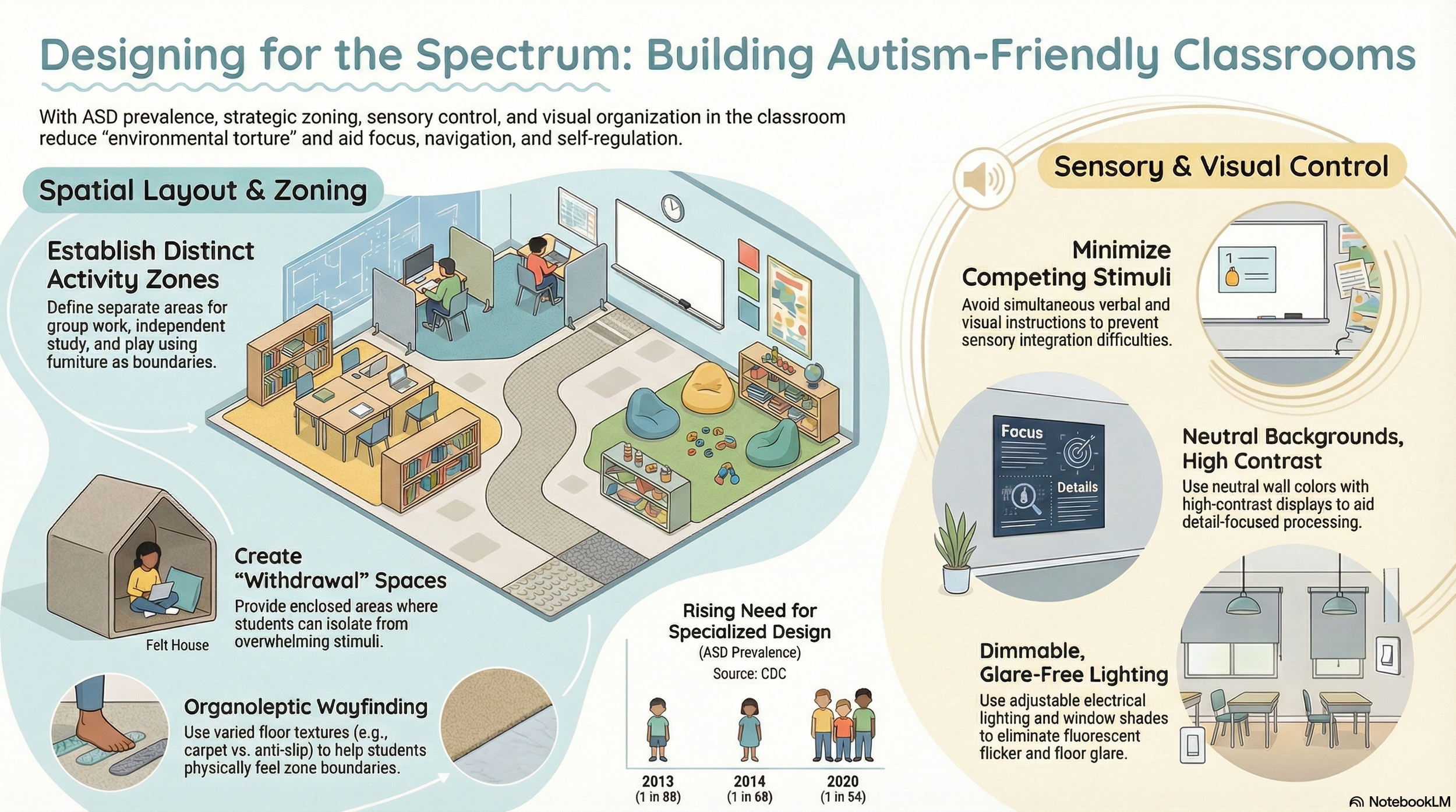
A visual representation of autism affirming classroom aesthetics.